About Long Fiber Reinforced Thermoplastic (LFRT)
Product Features:
- Exceptionally hard surface and compact shape
- This thermoplastic is considered as a good substitute of metal.
- Known for its high density level and good toughness level, it possesses combined attributes of long glass fiber.
- Stable physical properties, impact protected design and long lasting quality
- Perfect for extrusion molding and injection molding procedures
- Ideal substitute of metal and thermoset resins
- This thermoplastic is composed of engineering grade and standard quality resins.
- Useful for customization of various mechanical characteristics of long glass fiber based compound
Superior Mechanical PerformanceLFRT offers significantly greater impact strength than conventional short fiber thermoplastics. Its high tensile and flexural properties, combined with low shrinkage and water absorption, ensure long-lasting structural integrity. This makes it especially suitable for applications where reliability under mechanical stress is essential.
Versatile Processing MethodsThis material can be processed using injection molding, compression molding, or extrusion, allowing manufacturers flexibility in producing parts with tailored geometry and surface finish. Its thermal stability and form adaptability make it a popular choice in industrial and engineering environments.
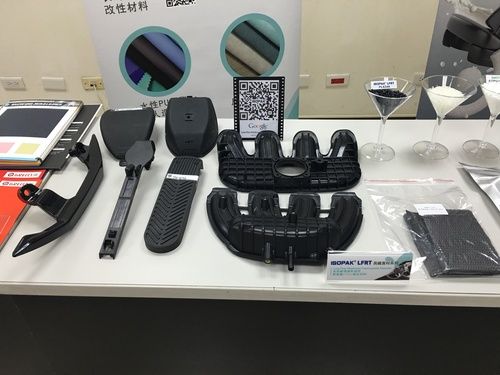
Diverse Industrial ApplicationsLFRT is utilized in automotive structural parts, electrical housings, industrial machinery, furniture, and sports equipment. Its lightweight yet robust nature, along with good thermal and electrical properties, supports its use in areas requiring high strength-to-weight ratios and durability.
FAQs of Long Fiber Reinforced Thermoplastic (LFRT):
Q: How is Long Fiber Reinforced Thermoplastic (LFRT) typically processed?
A: LFRT is processed through injection molding, compression molding, or extrusion. These methods allow manufacturers to create parts with varied shapes, surface finishes, and mechanical properties to meet specific application needs.
Q: What makes LFRT more beneficial compared to conventional short glass fiber reinforced thermoplastics?
A: LFRT provides superior impact strength, higher tensile and flexural modulus, and lower shrinkage, resulting in greater durability and long-term performance in demanding applications compared to traditional short fiber reinforced plastics.
Q: When should LFRT be chosen for an engineering application?
A: LFRT is ideal when high mechanical strength, good thermal stability (up to 130C), and low weight are required, such as in automotive, electrical, or industrial components where reliability and performance matter.
Q: Where is LFRT commonly used?
A: LFRT commonly finds application in automotive parts, electrical housings, industrial machine components, sports equipment, and furniture due to its combination of strength, lightweight, and insulation properties.
Q: What is the primary benefit of using LFRT in automotive or electrical manufacturing?
A: The primary benefit is its excellent strength-to-weight ratio, combined with low water absorption and good electrical insulation. This contributes to safer, more durable, and lightweight finished products.
Q: How does LFRTs water absorption compare to other engineering plastics?
A: LFRT exhibits very low water absorption (less than 0.2% after 24 hours), which ensures dimensional stability and performance even in humid or wet environments, outperforming many traditional engineering plastics.







 Send Inquiry


 Send Inquiry